


Fabric air ducts for cooler rooms
Design, production and sale of fabric air ducts for cooler rooms
— Even cooling without "warm zones"
— No product dehydration or weight loss
— Stable temperature throughout the entire volume of the room
— Minimized condensation and frost
— Operation at low and sub-zero temperatures
— Reduced load on refrigeration equipment
— Energy savings up to 30%
Get advice
Why fabric air ducts are chosen for cooler rooms
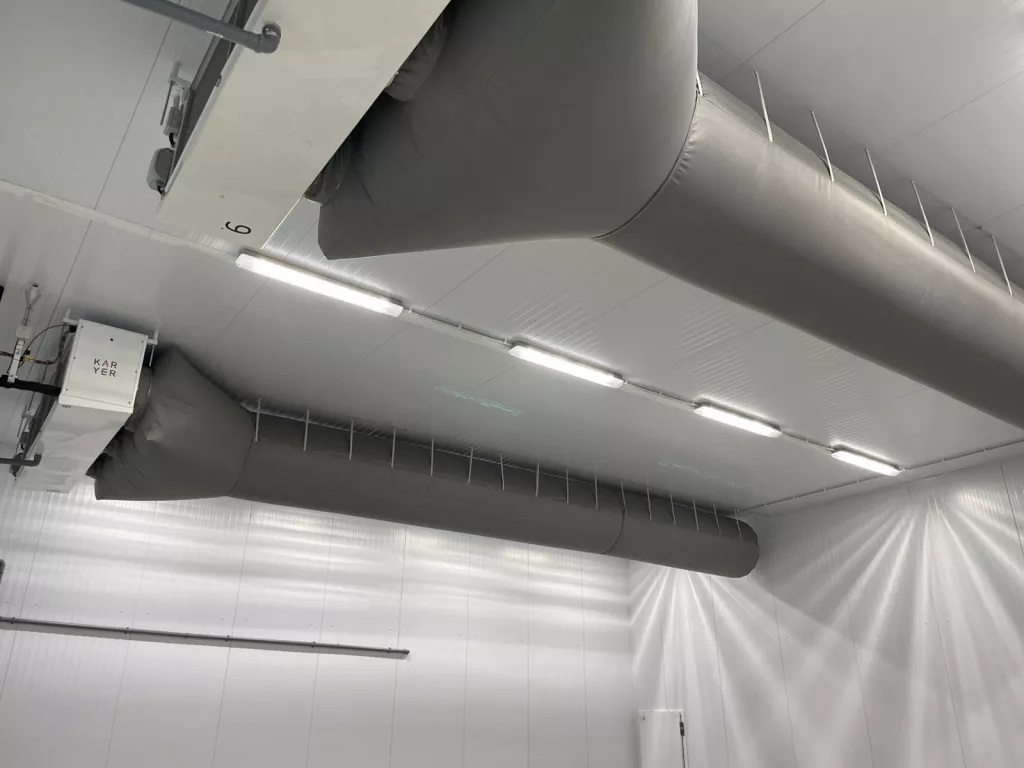
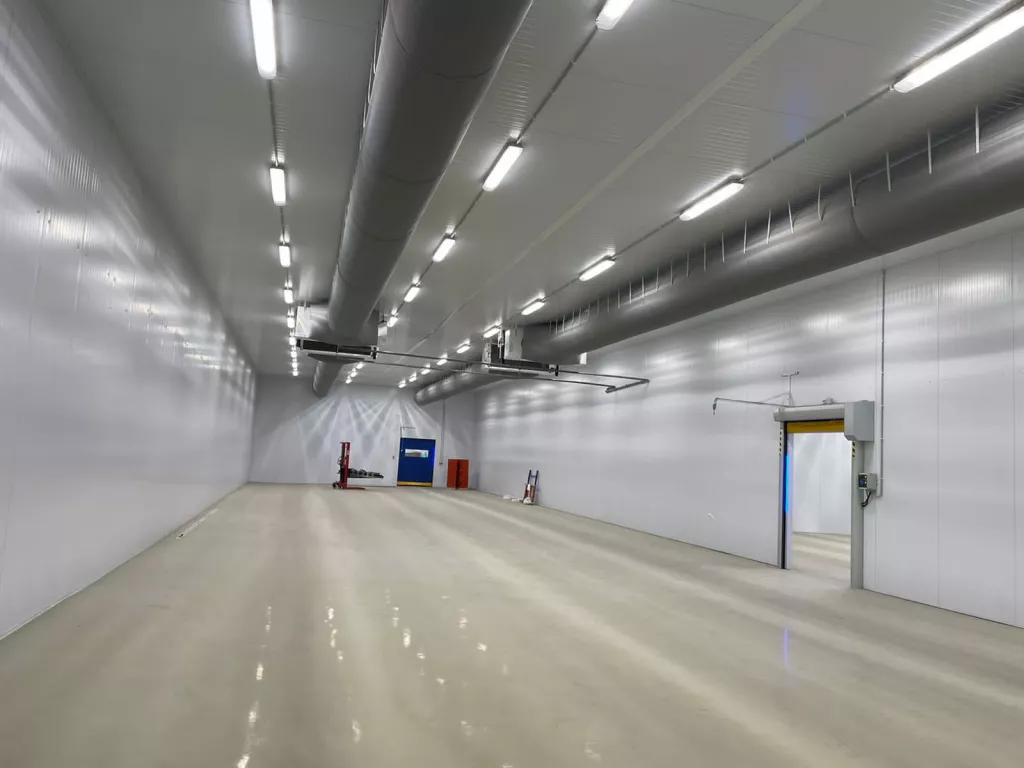
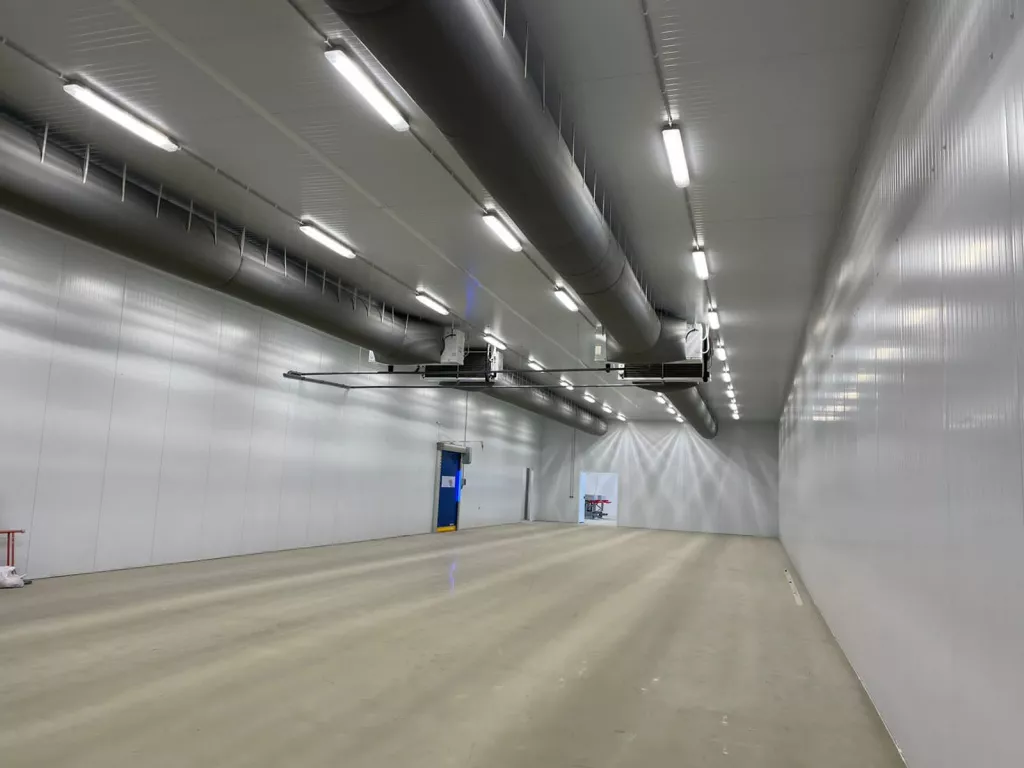
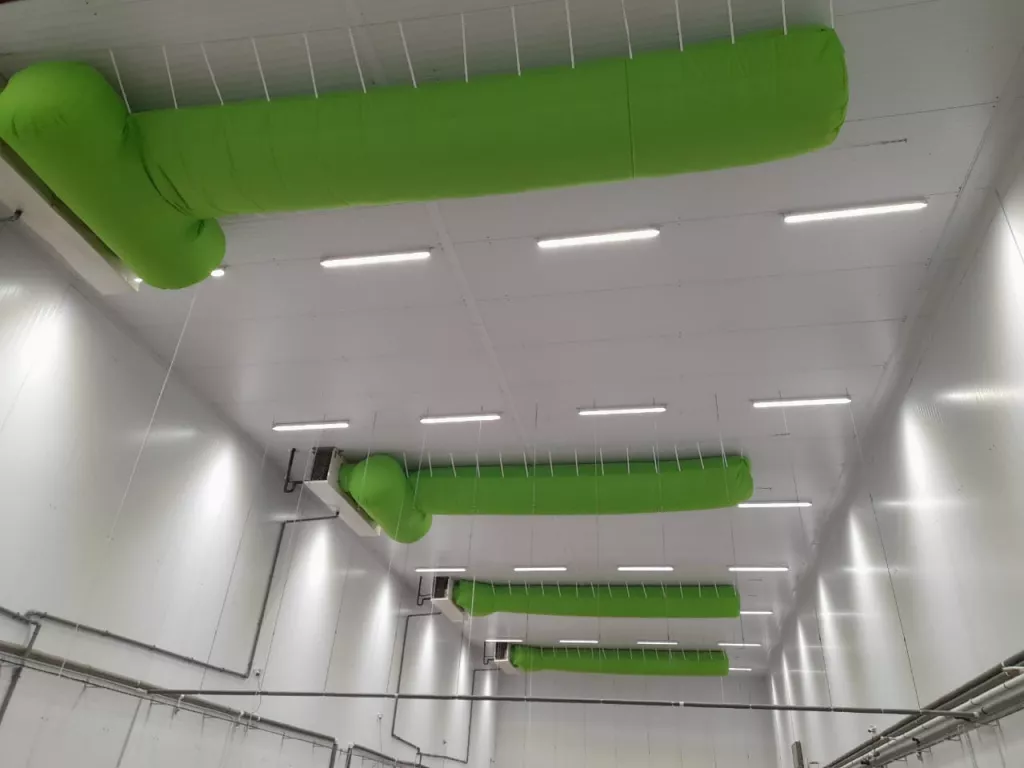
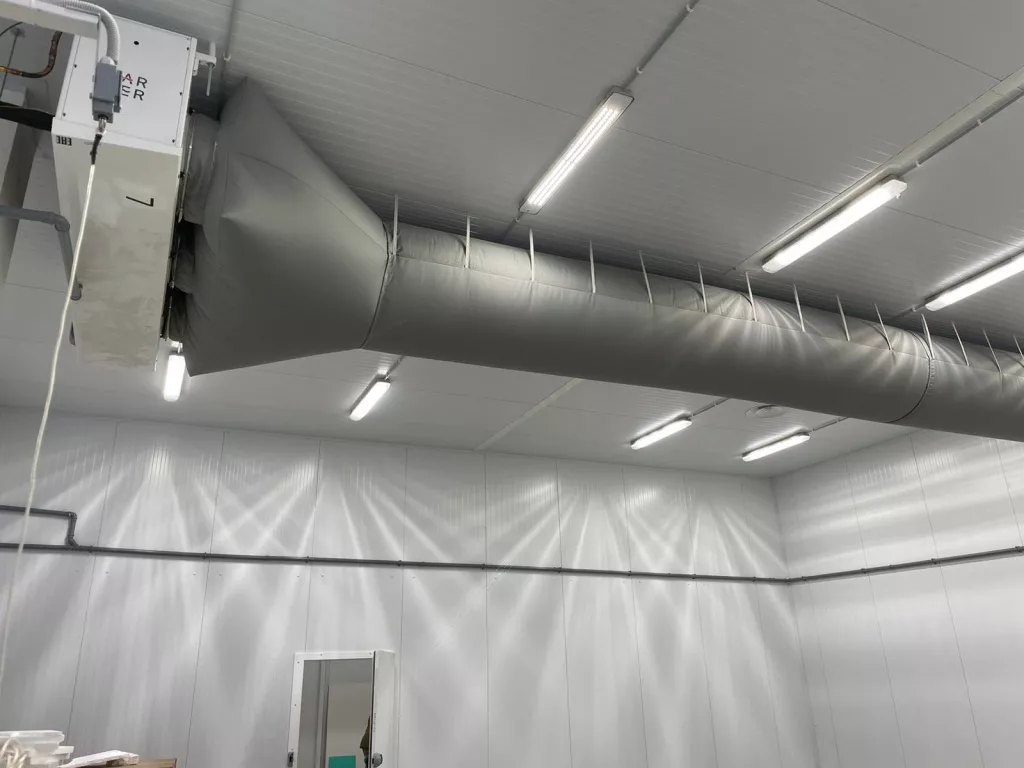
The cooling of products at food production sites is a crucial part of the production process. Most commonly, products are cooled following pre-packaging or heat processing. As a rule, cooler rooms used for storing food products are compact, but are filled with a large amount of products, so in order to ensure that the cold air is distributed evenly throughout the cooler room, companies often choose to use fabric air ducts. This solution helps ensure even cooling or freezing for products, no matter how far away they are set from the air cooler.

Uniform cooling
They ensure even distribution of cold air throughout the entire volume of the room without temperature differences. This eliminates the appearance of "warm zones" and helps maintain stable storage conditions for products.
No product dehydration
They form a soft, distributed air flow without directed jets. Products do not dry out, do not lose weight, and retain their marketable appearance even during long-term storage.
Stable temperature conditions
They allow precise maintenance of set cooling or freezing parameters. This is especially important for warehouses with high storage density and frequent door openings.
Operation at low temperatures
They are manufactured from fabrics designed for operation in cooling and freezing conditions. The material retains its strength and geometry at sub-zero temperatures.
Hygienic design
Fabric air ducts can be dismantled and washed, which facilitates compliance with sanitary requirements. The solution is suitable for food production facilities and warehouses with high cleanliness standards.
Reduced energy losses
Optimal air distribution reduces excess cooling consumption and lowers the load on refrigeration equipment. The system operates more efficiently with lower operating costs.
The process of manufacturing textile air ducts
Want to save money?
We will help you determine the optimal air distribution scheme for your facility
Get a quote
Types of fabric air ducts
Specifications
- Fire resistance of materials
- Temperature from -50°C to 380°C
- Chemical and corrosion resistance
- Antibacterial fabric
- Perforation diameter from 0.4 to 50 mm
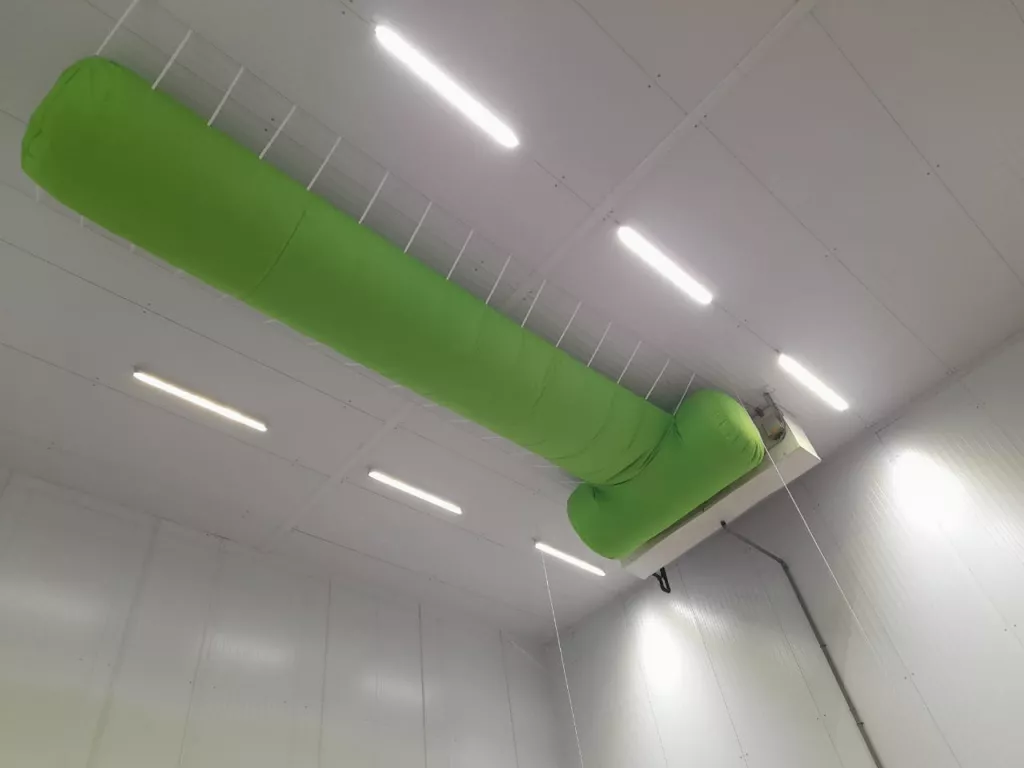
- Any shape and colour
- Diameter from 50 to 3600 mm
- Segment length up to 200 metres
- Reinforced frame possible
- For supply and exhaust ventilation

Transparent air duct

Membrane air duct

Textile nozzles for air coolers

Round exhaust air ducts

Segment-shaped supply air ducts

Quarter-circle supply air ducts

Semicircular supply air ducts

Rectangular exhaust air ducts

Round supply air ducts
Advantages of fabric air ducts

Chemical and corrosion resistance

Lightweight, significantly lighter than metal

Temperature range from -50°C to +380°C

Antibacterial properties, hygienic

Indifferent to magnetic and electric fields

Compatible with metal air ducts

Personalized design, color, and shape

Long service life: 10 years or more
Completed textile ventilation projects in food product cooler rooms
TEXAIR fabric air ducts successfully operate in cooler rooms of well-known companies