


Fabric air ducts for greenhouse business
Design, manufacturing, and supply of textile air ducts for greenhouses
— Uniform microclimate throughout the greenhouse length
— Safe circulation without plant stress
— Effective CO₂ distribution
— Reduced risk of fungal diseases
— Operation in high humidity conditions
— Reduced heating costs
— Increased yield and product uniformity
Get advice

Why fabric air ducts are selected for greenhouses
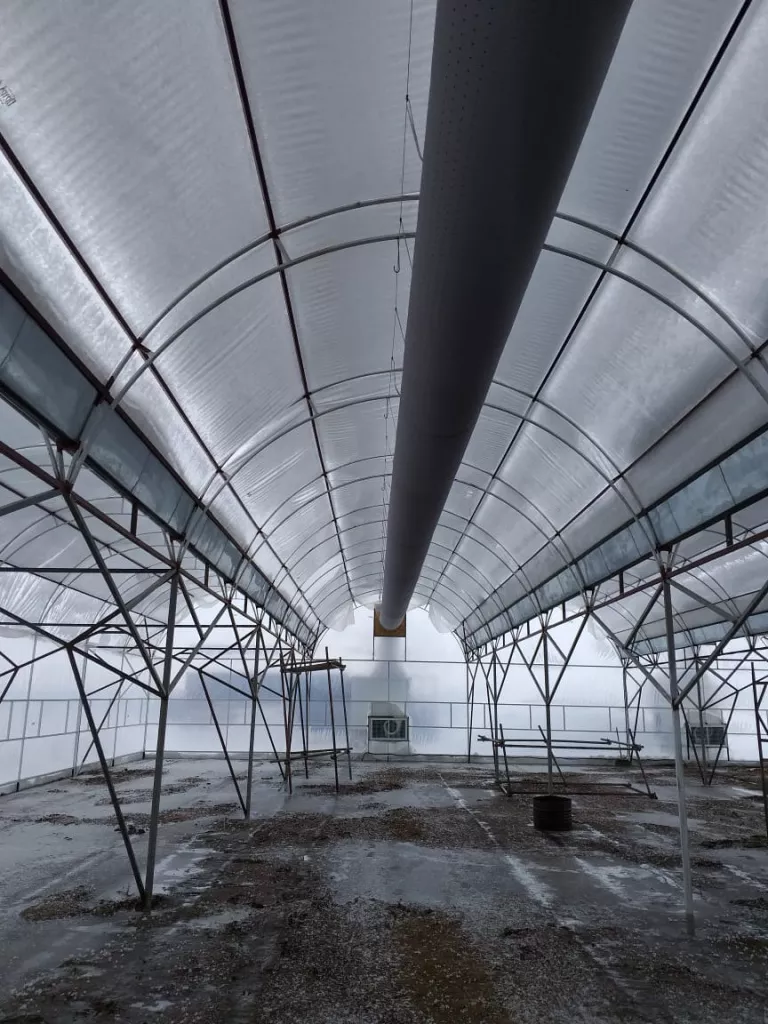
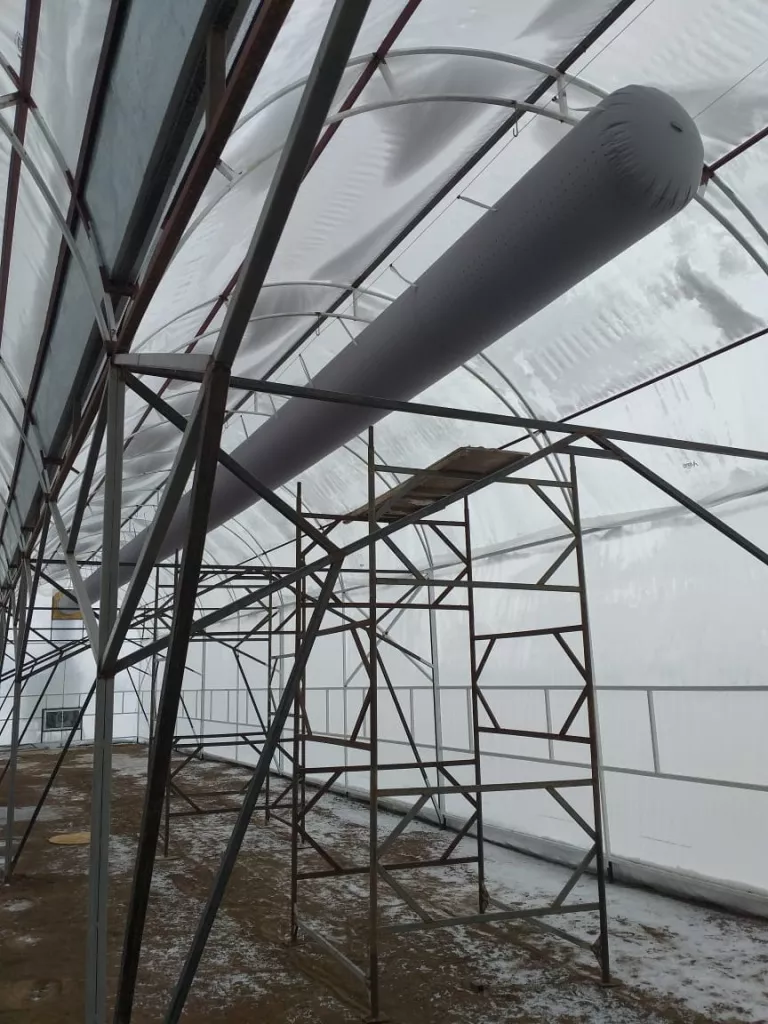
Fabric air ducts are usually located in the lower section of greenhouses to ensure heat transfer to the plants. Textile air ducts can also be used for uniform supply of carbon dioxide for crop nutrition. For greenhouses, maintaining a uniform microclimate throughout the entire structure length is critical, typically at temperatures from +18°C to +26°C and relative humidity of 60–85% depending on the crop. It is necessary to eliminate overheating in the upper zone and overcooling in the plant zone, ensure uniform CO₂ distribution, and prevent condensation formation on leaves. Ventilation must compensate for solar heat gains, operate in high humidity and aggressive environment conditions, and reduce the risk of fungal disease development.

Uniform microclimate
Ensures uniform air distribution throughout the greenhouse without temperature fluctuations. This eliminates areas of overcooling or overheating and creates uniform conditions for plant growth.
Safe air circulation
Forms a gentle flow without strong jets or drafts that can damage plants. Maintains natural ventilation without stressing crops.
Humidity control
Promotes the removal of excess moisture and prevents condensation from forming on leaves and greenhouse structures. This reduces the risk of fungal diseases and mold.
Effective CO₂ distribution
Allows carbon dioxide-enriched air to be distributed evenly throughout the planting area. Plants receive the same concentration of CO₂, which increases yield.
Operation in a humid environment
The materials are resistant to high humidity, aggressive environments, and regular washing. The air ducts retain their shape and performance characteristics throughout the season.
Reduced energy costs
Optimal distribution of warm air reduces heat loss and increases the efficiency of greenhouse heating. The system operates economically even in cold weather.
The process of manufacturing textile air ducts
Want to save money?
We will help you determine the optimal air distribution scheme for your facility
Get a quote
Types of fabric air ducts
Specifications
- Fire resistance of materials
- Temperature from -50°C to 380°C
- Chemical and corrosion resistance
- Antibacterial fabric
- Perforation diameter from 0.4 to 50 mm
- Any shape and colour
- Diameter from 50 to 3600 mm
- Segment length up to 200 metres
- Reinforced frame possible
- For supply and exhaust ventilation

Transparent air duct

Membrane air duct

Textile nozzles for air coolers

Round exhaust air ducts

Segment-shaped supply air ducts

Quarter-circle supply air ducts

Semicircular supply air ducts

Rectangular exhaust air ducts

Round supply air ducts
Advantages of fabric air ducts

Chemical and corrosion resistance

Lightweight, significantly lighter than metal

Temperature range from -50°C to +380°C

Antibacterial properties, hygienic

Indifferent to magnetic and electric fields

Compatible with metal air ducts

Personalized design, color, and shape

Long service life: 10 years or more
Completed textile ventilation projects
Over 6,000 completed projects in 40 countries. Our clients include Coca-Cola, Nestle, and Danone.