



Fabric air ducts for cowshed
Design, production and sale of textile air ducts for cowsheds
— Uniform air exchange without drafts
— Protection against condensation and dampness
— Resistance to aggressive environment
— Silent ventilation operation
— Antibacterial properties
— Ease of installation and maintenance
— Service life over 10 years
Get advice
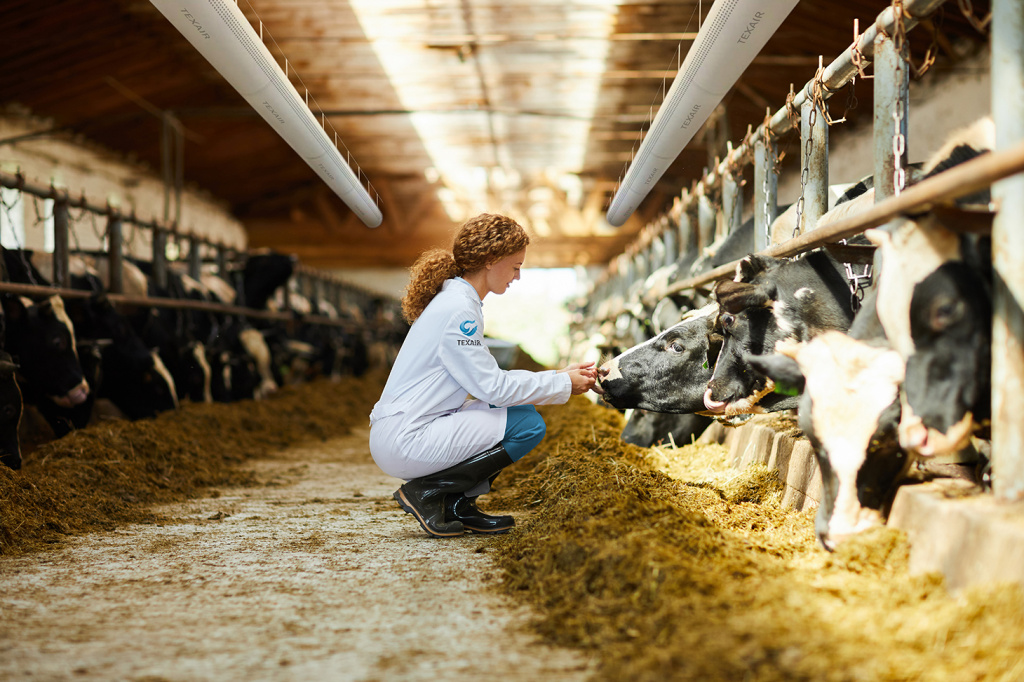

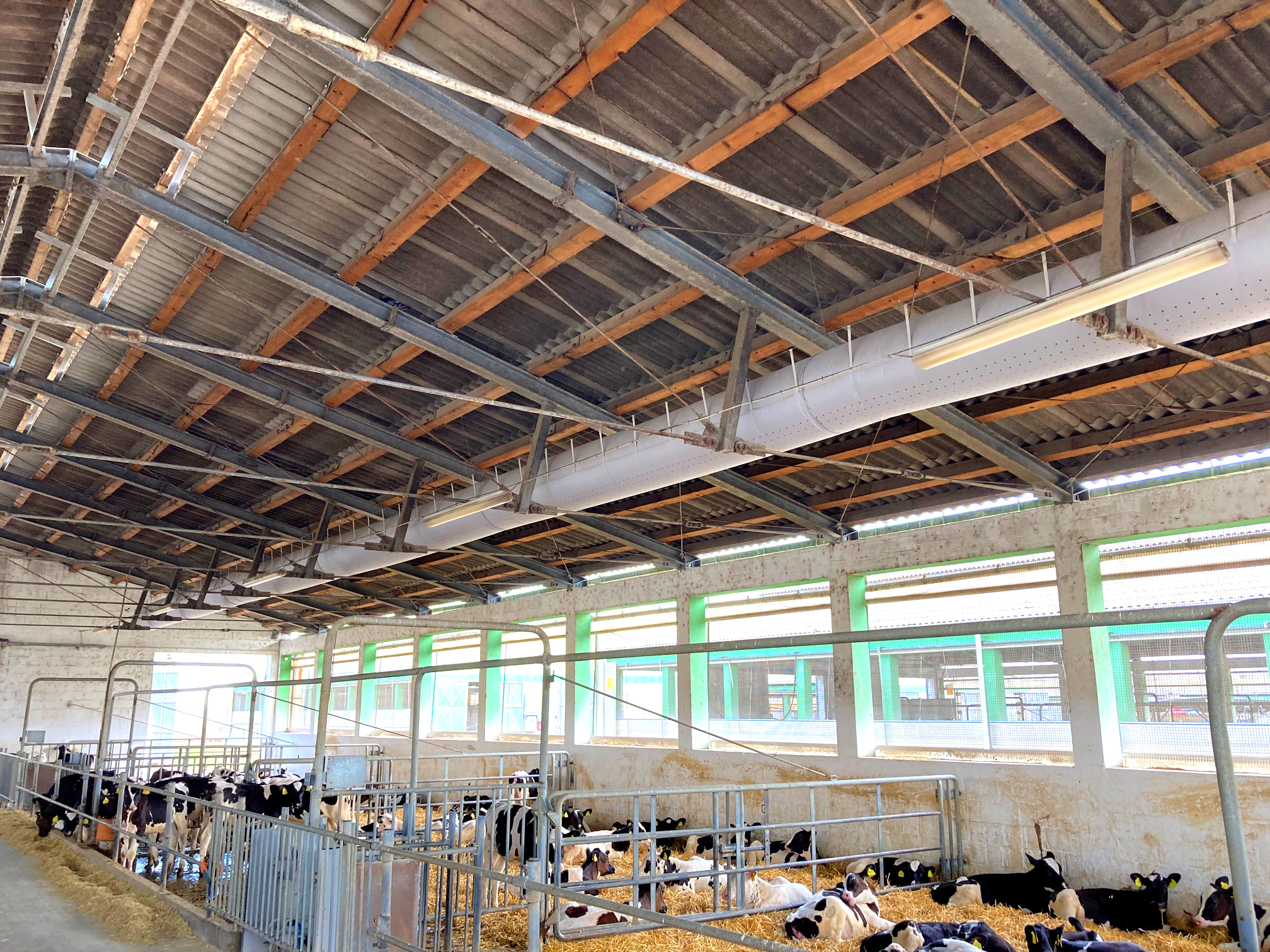
Why fabric air ducts are selected for cowsheds?
The main requirements for ventilation in cowsheds include maintaining optimal air exchange (at least 4–6 air changes per hour), controlling humidity levels (60–80%) and temperature (from +5°C in winter to +22°C in summer), as well as effectively removing harmful gases (ammonia, carbon dioxide). The system must ensure uniform air distribution without drafts, especially in animal resting areas, and comply with sanitary standards to prevent respiratory diseases. It is necessary to supply a strictly defined volume of air to each animal stall at a specified velocity.

Uniform air exchange without drafts
Our textile air ducts provide soft air distribution throughout the entire cowshed area, eliminating dangerous zones with stagnant air or sharp flows. This creates comfortable conditions at all levels — both for standing animals and for those resting in stalls.
Protection against condensation and dampness
Due to the special fabric structure, the air ducts prevent the formation of moisture droplets, protecting the premises from mold and dampness. This is especially important for calf barns, where increased humidity can provoke respiratory diseases.
Resistance to aggressive environment
Textile air ducts are resistant to ammonia fumes, disinfectants, and high humidity, ensuring a long service life even in intensive livestock farming conditions. They do not rust and do not deteriorate during regular sanitary treatments.
Reduced stress for animals
The silent operation of fabric ventilation and the absence of sharp temperature changes create a calm atmosphere, which positively affects livestock productivity and health. This is especially important for dairy cows sensitive to stress factors.
Quick cleaning and disinfection
The smooth surface does not accumulate dust and can be washed without dismantling the system. It can be washed in an industrial washing machine using special detergents. Textile air ducts do not lose their properties even after repeated washing.
Required certification
Our company has a certificate of suitability for the use of TEXAIR air ducts in food enterprises and an expert conclusion based on the results of sanitary-epidemiological inspection.
The process of manufacturing textile air ducts
Want to save money?
We will help you determine the optimal air distribution scheme for your facility
Get a quote
Types of fabric air ducts
Specifications
- Fire resistance of materials
- Temperature from -50°C to 380°C
- Chemical and corrosion resistance
- Antibacterial fabric
- Perforation diameter from 0.4 to 50 mm
- Any shape and colour
- Diameter from 50 to 3600 mm
- Segment length up to 200 metres
- Reinforced frame possible
- For supply and exhaust ventilation

Transparent air duct

Membrane air duct

Textile nozzles for air coolers

Round exhaust air ducts

Segment-shaped supply air ducts

Quarter-circle supply air ducts

Semicircular supply air ducts

Rectangular exhaust air ducts

Round supply air ducts
Advantages of fabric air ducts

Chemical and corrosion resistance

Lightweight, significantly lighter than metal

Temperature range from -50°C to +380°C

Antibacterial properties, hygienic

Indifferent to magnetic and electric fields

Compatible with metal air ducts

Personalized design, color, and shape

Long service life: 10 years or more
Implemented projects on textile ventilation in cowsheds and calf barns
TEXAIR textile air ducts are used in Belje cowsheds in Croatia
Dairy plant
Belje cow barn for meat production