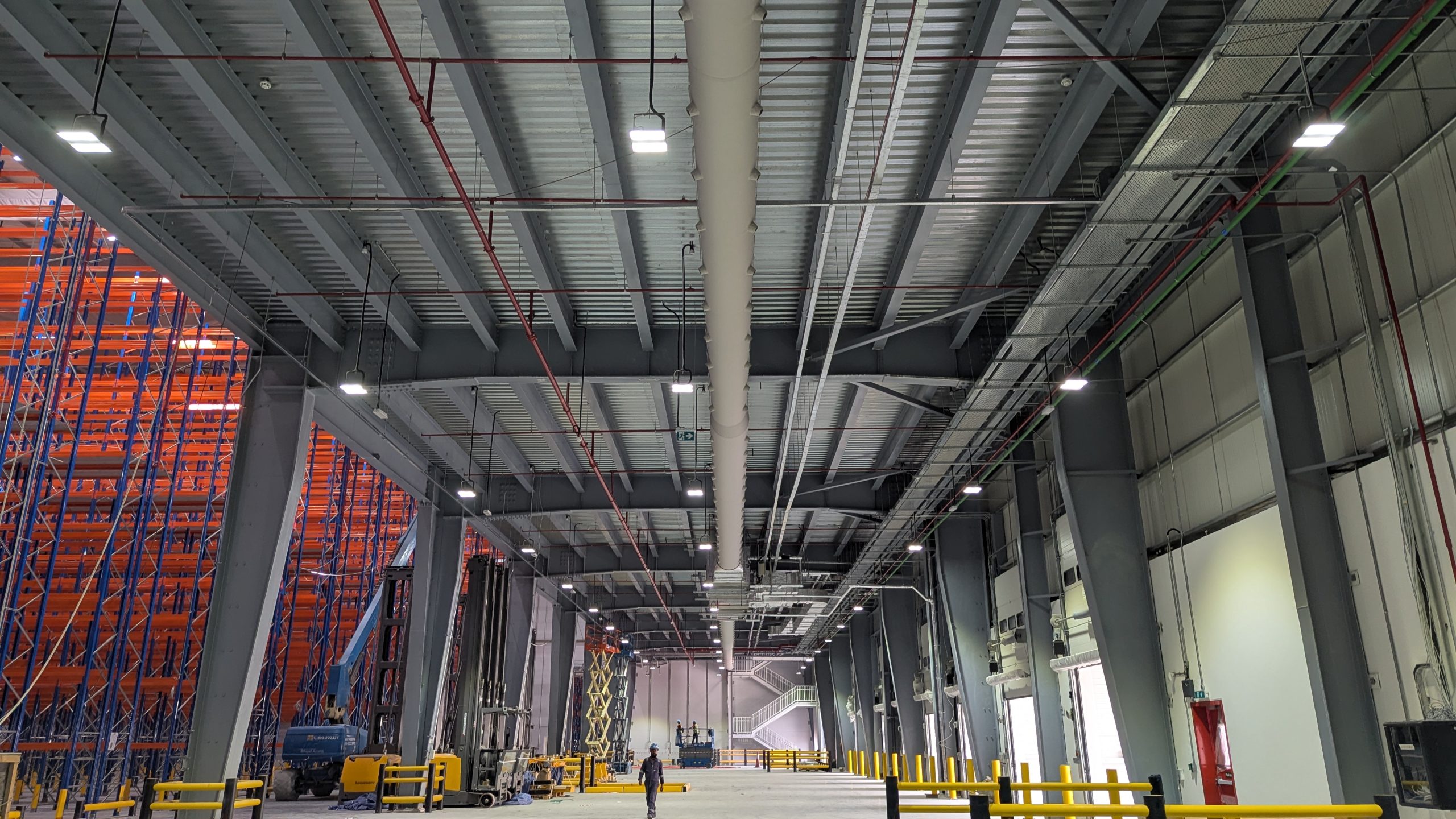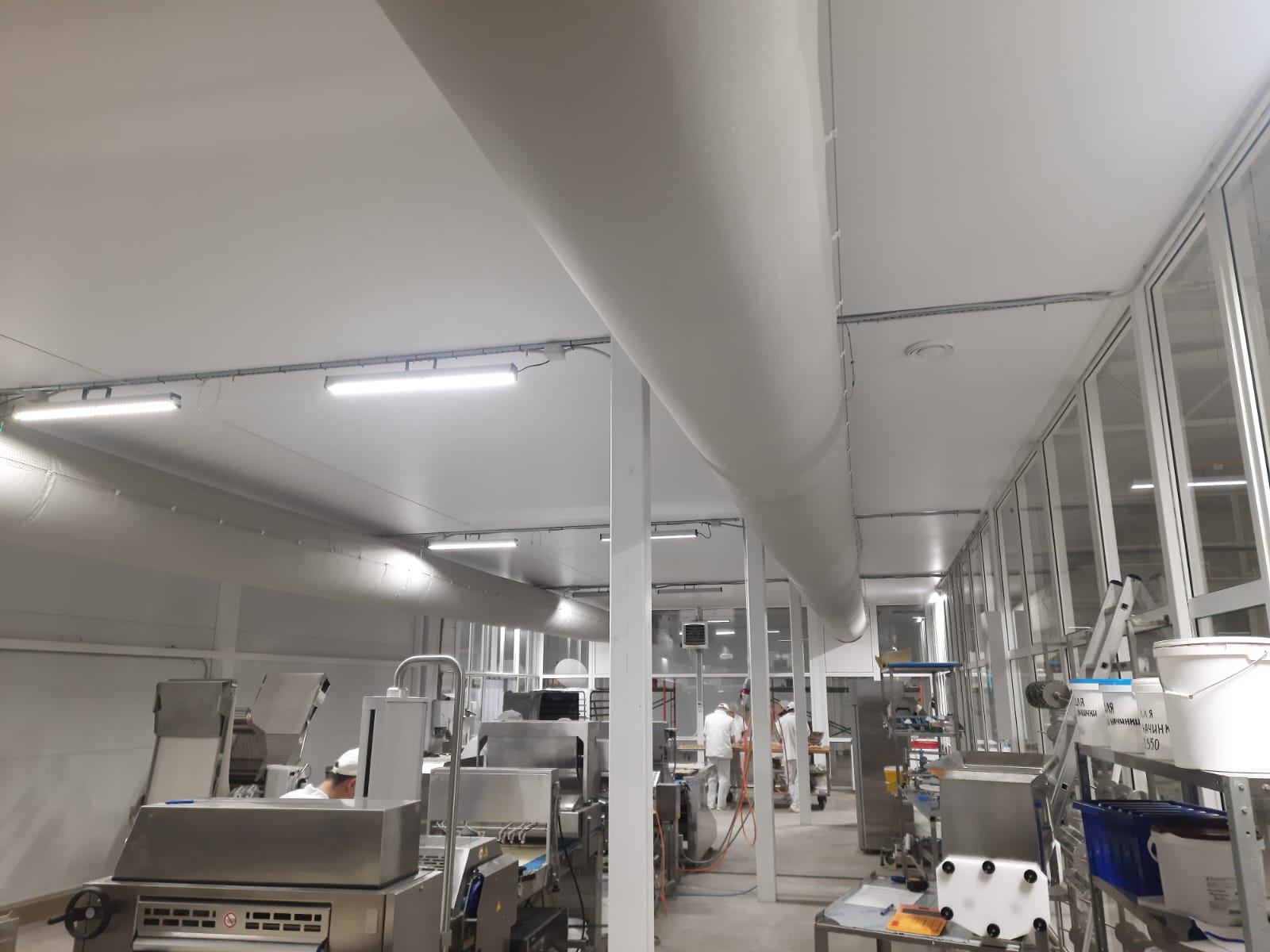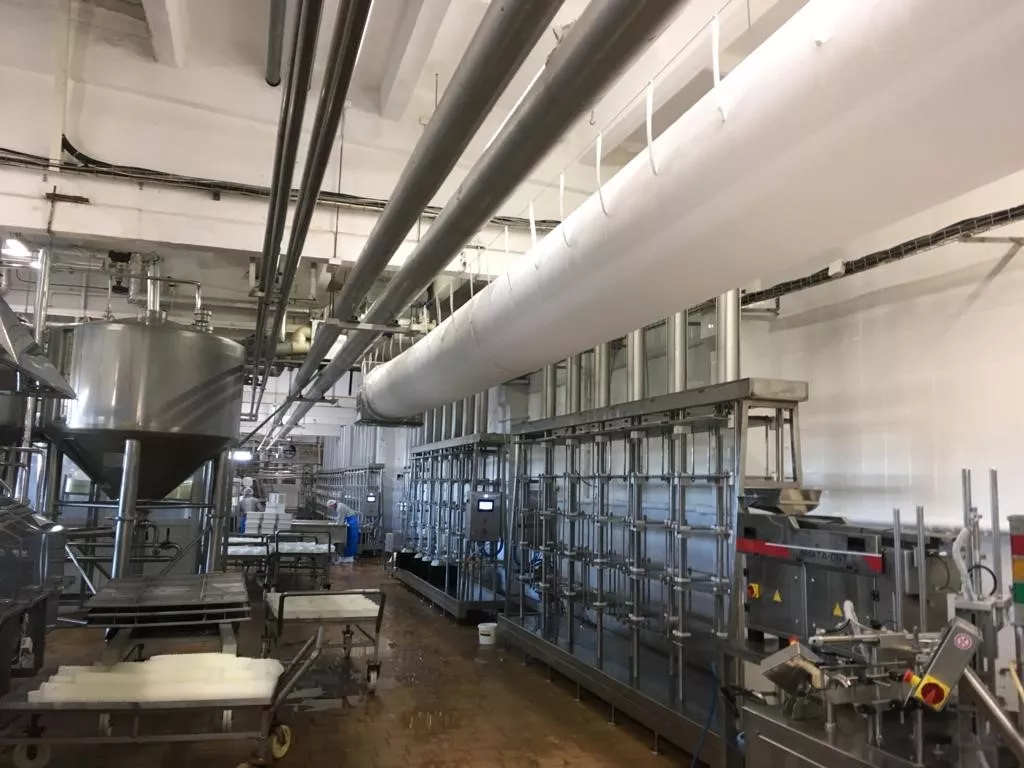



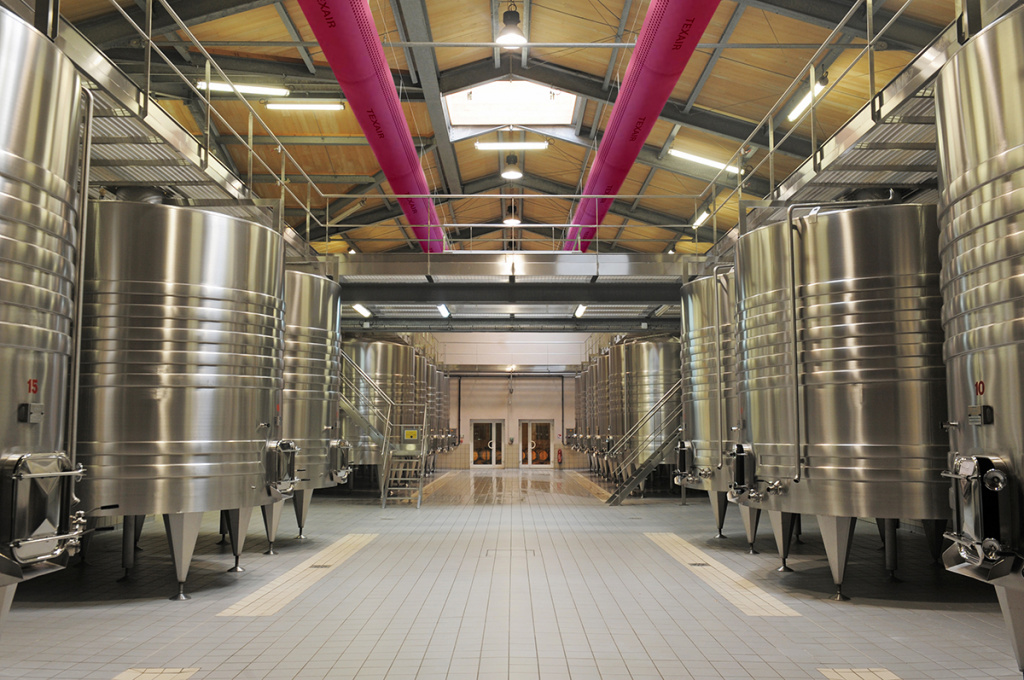
Fabric air ducts for wine factory
Design, manufacturing, and supply of textile air ducts for wine production facilities
— Stable microclimate control for fermentation and aging/maturation processes
— Precise maintenance of temperature and relative humidity parameters
— Draft-free operation with minimal temperature fluctuations
— Protection against condensation formation and corrosion of process equipment
— Hygienic solution compliant with food-grade production standards
— Aesthetic design befitting the prestige and architectural character of a winery
— Custom color options and seamless integration into interior design concepts
Get advice
Why fabric air ducts are selected for fermentation facilities and winemaking
To ensure the primary fermentation process of wine, it is necessary to maintain a specified ambient temperature and avoid drafts and excessive humidity. Personnel are not constantly present in the workshop, but only during technological operations. Wine production facilities require stable temperature maintenance (in fermentation areas +18...+28°C, in aging rooms +12...+16°C) and humidity of 60-75% to prevent corks from drying out and excessive evaporation. It is important to eliminate sudden temperature changes and directed air flows that could disrupt technological processes or the microclimate of barrel rooms. The ventilation system must ensure uniform parameters throughout the entire volume, prevent condensation on tanks and structures, and comply with food production sanitary requirements.

Stable temperature
Ensures uniform air distribution without sudden temperature changes in the fermentation and aging areas. This helps to maintain the predictability of processes and the quality of wine at every stage of production.
Humidity control
Systems maintain optimal relative humidity levels in storage areas and barrel rooms, preventing cork drying and minimizing excessive evaporation during maturation.
Draft-free operation
Textile ducting generates gentle, diffuse airflow without focused jets or high-velocity streams. This eliminates localized cooling of vessels and preserves the stability of storage conditions.
Condensation prevention
The air-impermeable fabric construction, combined with controlled surface temperature, significantly reduces condensation risk on equipment, tanks, and building structures—critical for protecting metal components and maintaining sanitary conditions.
Hygienic solution
Air ducts are easy to dismantle and require regular cleaning. They meet the requirements for food industry production facilities.
Winery aesthetics
They are manufactured in colors that match the interior and blend harmoniously with the architecture of tasting rooms and production spaces. Engineering systems do not disrupt the atmosphere of wine production and tourist areas.
The process of manufacturing textile air ducts
Want to save money?
We will help you determine the optimal air distribution scheme for your facility
Get a quote
Types of fabric air ducts
Specifications
- Fire resistance of materials
- Temperature from -50°C to 380°C
- Chemical and corrosion resistance
- Antibacterial fabric
- Perforation diameter from 0.4 to 50 mm
- Any shape and colour
- Diameter from 50 to 3600 mm
- Segment length up to 200 metres
- Reinforced frame possible
- For supply and exhaust ventilation

Transparent air duct

Membrane air duct

Textile nozzles for air coolers

Round exhaust air ducts

Segment-shaped supply air ducts

Quarter-circle supply air ducts

Semicircular supply air ducts

Rectangular exhaust air ducts

Round supply air ducts
Advantages of fabric air ducts

Chemical and corrosion resistance

Lightweight, significantly lighter than metal

Temperature range from -50°C to +380°C

Antibacterial properties, hygienic

Indifferent to magnetic and electric fields

Compatible with metal air ducts

Personalized design, color, and shape

Long service life: 10 years or more
Completed textile ventilation projects
Over 6,000 completed projects in 40 countries. Our clients include Coca-Cola, Nestle, and Danone.